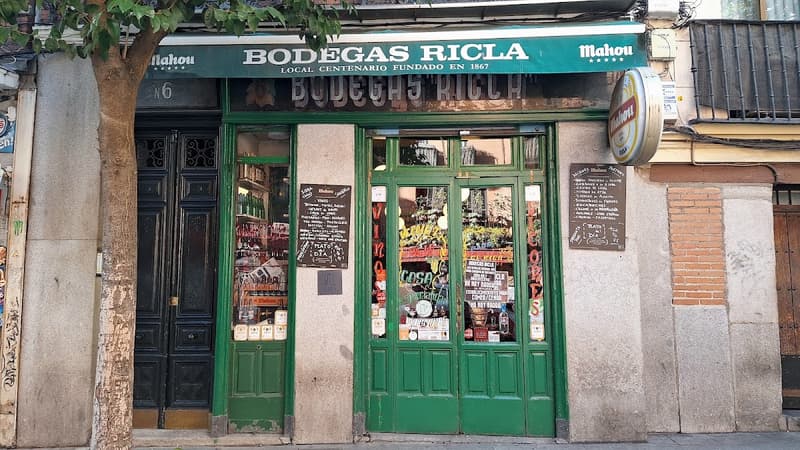
Taberna Bodegas Ricla
Madrid, Spain · Centro
Insider Compass
An expert assessment built on data, context and gastronomic judgement.
About Taberna Bodegas Ricla
Since 1867, this family-run taberna has stood as a living monument to Madrid's tavern tradition, complete with original ceramic wine vats, a tin bar, and brass taps that dispense house vermouth. Tucked along Calle Cuchilleros in the heart of old Madrid, it's where Mama Ana still cooks behind the scenes while her sons work the room, pouring vermouth de grifo Izaguirre and serving the kind of callos a la madrileña and bacalao en aceite that locals cross town for. The place wears its age proudly—cash only since opening, wine cellar doubling as a Civil War air-raid shelter—and draws a devoted crowd of Madrileños who appreciate authenticity over Instagram moments. This is old Madrid distilled into a few square meters of tile, wood, and the smell of long-simmered tripe.
Good to know
Bring cash—they've been cash-only since 1867 and aren't about to change now. There's an ATM nearby if you're caught short.
The chef
Ana (Mama)
Mama Ana represents the heart of this operation, cooking in the traditional style passed down through generations of Madrid taberna kitchens. Her approach is rooted in the casero (home-style) tradition, where technique is less about formal training and more about decades of daily repetition perfecting dishes like callos and bacalao that demand patience and respect for ingredient quality. While formal culinary credentials aren't part of her story, her knowledge comes from the kind of apprenticeship that only a lifetime in a family taberna can provide. Her sons have taken on the front-of-house duties, but Ana remains the guardian of recipes and standards that have kept locals returning for generations.
The Insider Compass
Four dimensions, each assessed independently against the same criteria everywhere we rate.
Plate
The cooking here follows the old taberna playbook: deeply traditional preparations executed with care and respect for ingredient provenance. Callos a la madrileña emerge velvety and rich, the tripe tender from slow braising, while the bacalao en aceite showcases pristine salt cod swimming in quality olive oil with just enough garlic to frame the fish. Other highlights include cecina drizzled with excellent oil, boquerones en vinagre that taste of the sea, and albóndigas (meatballs) made daily by Ana that regulars order without hesitation.
Vibe
LivelyThis is a standing-room taberna at its core, though a few tables now accommodate those ordering raciones—expect a lively, convivial atmosphere where locals cycle through for a quick vermut and tapa before moving on. The eclectic neighborhood crowd mixes seamlessly, conversations flowing in rapid-fire Spanish punctuated by the hiss of the beer tap and clink of glasses. It's authentically Madrid, which means no English menu, no tourist hand-holding, and an energy that rewards those who embrace the ritual rather than fight it.
Service
The two brothers running the front of house maintain the no-frills efficiency of traditional taberna service—this is a place that reads your comfort with the format and responds accordingly. First-time visitors may find the approach brusque, but return once and the warmth emerges; they're protective of their family's legacy and wary of those treating it as a photo opportunity rather than a serious eating and drinking establishment. Service is knowledgeable and direct, with solid recommendations for wines from the vats and guidance through the daily offerings if you engage with genuine interest.
Setting
The interior is pure 19th-century taberna: original ceramic wine vats line one wall, their hand-painted labels faded but legible, while the tin bar shows the patina of more than 150 years of elbows and glasses. Brass taps for vermouth and wine remain functional pieces of history, and the tile work and wooden accents transport you to another era of Madrid hospitality. Located on Calle Cuchilleros near Plaza Mayor, the setting is compact and atmospheric, designed for the standing ritual of the copeo (bar hopping) rather than lingering dinners.
These four dimensions are a handful of the attributes we review. The Insider Rating also draws on research the compass does not display — among them the wine programme, the size and quality of the cellar, the location, and how long the house has operated. It is not an average of the scores above.
Go for
- An authentic slice of 19th-century Madrid taberna culture with vermouth from the tap
- Traditional callos a la madrileña and bacalao prepared the way generations of Madrileños remember
- A family-run operation where the matriarch still cooks and her sons pour with knowledge and pride
Don't go for
- English menus, credit cards, or service calibrated for first-time tourists expecting hand-holding
- A leisurely seated meal if you're only ordering small tapas—tables are for those committing to raciones