Insider Compass
An expert assessment built on data, context and gastronomic judgement.
About Sushizanmai
Sushizanmai stands as the largest sushi operation in Japan by sales, with its Tsukiji flagship open around the clock to serve the parade of market workers, jet-lagged travelers, and locals who know where to find serious tuna at any hour. The chain's president makes headlines each January by purchasing the most expensive tuna at Toyosu's New Year auction, a tradition that signals the company's commitment to showcasing premium maguro alongside accessible everyday sushi. This is high-volume edomae-style sushi done with surprising integrity—counter seating puts you face-to-face with skilled itamae working at speed, and the English menus and tablet ordering make it genuinely approachable for visitors without sacrificing the essential Japanese sushi experience.
Good to know
Arrive during off-peak hours—around 3-5 PM or late evening after 10 PM—to avoid the crush and actually enjoy watching the chefs work without feeling rushed through your meal.
The Insider Compass
Four dimensions, each assessed independently against the same criteria everywhere we rate.
Plate
The fish quality here consistently exceeds what you'd expect from a chain operation—chu-toro and o-toro arrive buttery and properly aged, while seasonal catches like aji and kinmedai show the kitchen's direct market connections. The specialty tuna sets showcase different cuts from fatty belly to lean akami, giving you a proper education in maguro's range, and supplementary dishes like chawanmushi and asari steamed clams round out the experience beyond nigiri.
Vibe
LivelyThe energy runs high and democratically chaotic—24-hour service means you might share counter space with sake-flushed salarymen at dawn or families fresh off afternoon flights, all united by the rhythmic knife work and shouts of "irasshaimase!" The bustling Tsukiji location captures that essential fish market vitality, though the constant turnover and efficient seating system keep things moving at a brisk clip.
Service
Staff operate with practiced efficiency rather than intimate omakase-style engagement—they'll guide you through the tablet ordering system, deliver plates promptly, and answer questions in workable English, but don't expect the chef to narrate each nigiri's provenance. The hospitality feels genuinely welcoming despite the volume, with particular attention paid to first-time foreign visitors navigating their first proper sushi counter experience.
Setting
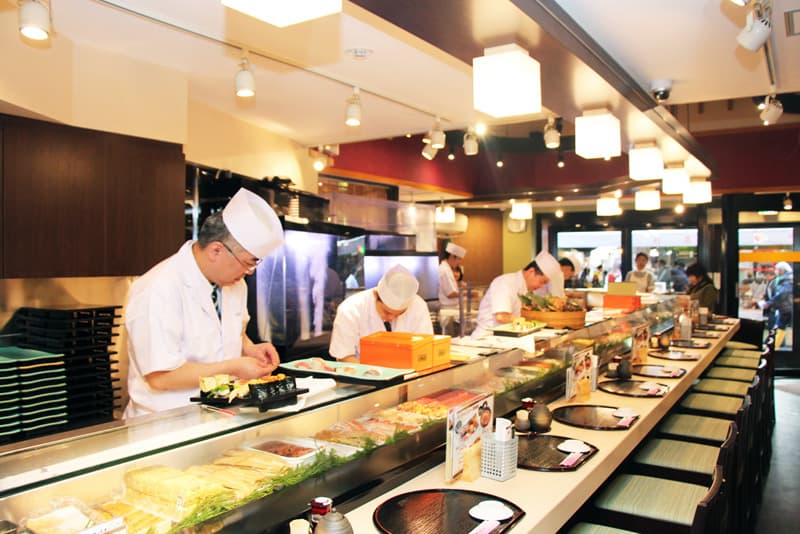
The counter stretches long with prime seats facing itamae at their cutting boards, backed by refrigerated cases displaying the day's neta in classic sushiya fashion. The overall design prioritizes function over fussiness—bright lighting, cleanly tiled surfaces, and the kind of utilitarian comfort that lets you focus entirely on what's landing on your plate. Being steps from the historic Tsukiji outer market means you're dining in the gravitational center of Tokyo's seafood culture, even if the interior itself doesn't chase Instagram aesthetics.
These four dimensions are a handful of the attributes we review. The Insider Rating also draws on research the compass does not display — among them the wine programme, the size and quality of the cellar, the location, and how long the house has operated. It is not an average of the scores above.
Go for
- Legitimate high-volume sushi near Tsukiji with proper tuna pedigree and 24-hour availability
- Tourist-friendly service with English support that doesn't compromise on fish quality or technique
- Counter seating that delivers an authentic itamae experience without the omakase price tag or intimidation factor
Don't go for
- Intimate, quiet omakase with personalized chef interaction and bespoke pacing
- Hidden local gem dining—this is proudly high-profile and attracts crowds precisely because word has spread about the quality-to-accessibility ratio
Details
4-chōme-11-9 Tsukiji, Chuo City, Tokyo 104-0045, Japan
$$