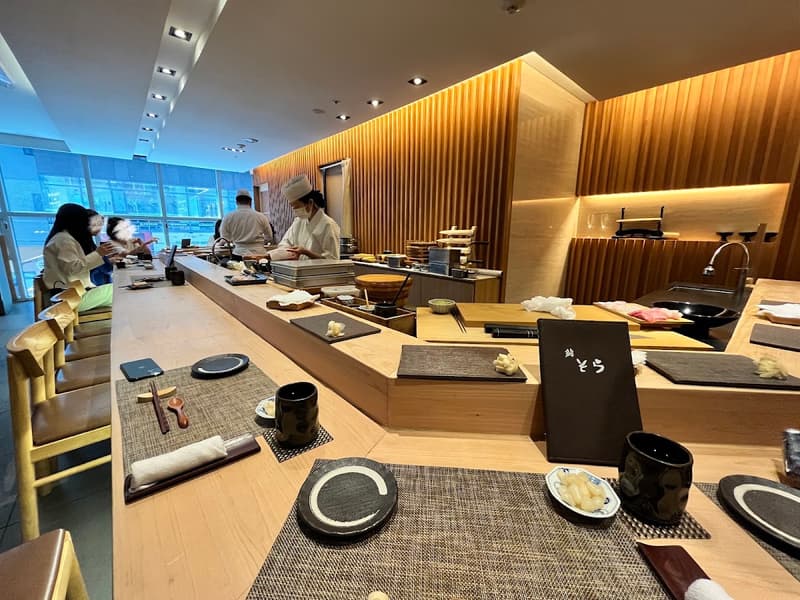
Sushi Sora Daechi
Gangnam District, South Korea · Samseong-ro 85-gil
Insider Compass
An expert assessment built on data, context and gastronomic judgement.
About Sushi Sora Daechi
Tucked into an office building near Seolleung Station, Sushi Sora Daechi has carved out a loyal following since 2017 as an approachable omakase destination that doesn't compromise on fundamentals. Chef Nakamura Koji, trained in Tokyo's Shibuya district, leads a brigade of skilled itamae who guide guests through each course with care, making this an ideal introduction to counter dining for newcomers while offering enough polish to satisfy seasoned sushi enthusiasts. The lunch service moves briskly—expect the full omakase in under an hour—while dinner allows a more leisurely pace to appreciate the progression of neta flown in from Japanese markets. With its balance of quality, value, and accessibility, this mini-chain manages to feel personal rather than formulaic.
Good to know
Book the lunch service if you're on a budget or short on time—at 60,000 won, it's half the price of dinner and covers nearly the same progression, just at a brisker clip.
The chef
Nakamura Koji
Nakamura Koji honed his craft in Tokyo's Shibuya district, absorbing the fundamentals of Edomae sushi before bringing that discipline to Seoul's competitive omakase scene. Since opening Sushi Sora Daechi in 2017, he's built a reputation for consistency and approachability, training his team to maintain exacting standards across multiple seatings while keeping the experience warm and educational. His philosophy centers on respecting the ingredients without unnecessary flourishes—letting quality fish speak for itself through proper aging, precise knife work, and well-balanced shari. Nakamura's hands-on approach extends beyond his own counter; he's cultivated a brigade of itamae who share his commitment to explaining the craft, making omakase accessible to newcomers without diluting its essence.
The Insider Compass
Four dimensions, each assessed independently against the same criteria everywhere we rate.
Plate
The kitchen honors classic Edomae principles without overreaching, building each nigiri on red vinegar shari that's neither too firm nor too loose. Standouts include shimaji (striped jack) with its almost crunchy texture, lightly cured saba formed into elegant cylinders, and a decadent uni-topped nori roll that regulars time their visits around. The ankimo donburi with monkfish liver is a signature interlude, and the anago rivals what you'd find in Tokyo at twice the price—brushed with sweet tare and torched just enough to coax out its natural oils.
Vibe
The counter-focused layout puts you directly in the chef's line of sight, with each itamae managing seven to eight guests in a rhythm that's efficient without feeling rushed. The room maintains a quiet, focused energy—this isn't a place for loud celebration, but rather for appreciating the craft unfolding before you. A single private room in back offers an escape for groups seeking intimacy, though the real draw is the front-row seat at the counter where you can watch hands move through their mise with practiced precision.
Service
Each chef takes personal ownership of their section, walking guests through the provenance and preparation of every piece with genuine enthusiasm—even deploying Google Translate when language barriers arise. The hospitality is warm and unpretentious, with staff willing to adjust wasabi levels, rice portions, and pacing to individual preferences. Service flows with the practiced ease of a well-trained brigade, though corkage fees feel steep given the minimal wine service provided.
Setting
The second-floor location in a commercial building near COEX won't win design awards, but the interior is clean-lined and uncluttered, letting the hinoki counter and mise en place take center stage. Natural wood tones and soft lighting create a calm backdrop that puts the focus squarely on the fish and the hands shaping it. The space feels more authentic izakaya than Instagram showroom—a refreshing departure from Seoul's more design-forward omakase temples.
These four dimensions are a handful of the attributes we review. The Insider Rating also draws on research the compass does not display — among them the wine programme, the size and quality of the cellar, the location, and how long the house has operated. It is not an average of the scores above.
Go for
- An approachable omakase experience that balances quality with value
- Chefs who take time to explain each piece and adjust to your preferences
- Classic Edomae technique without the pretension or Tokyo-level pricing
Don't go for
- Intimate, slow-paced dining—lunch service moves in under an hour
- A deep wine program or elaborate beverage pairings
Details
33 Samseong-ro 85-gil, Gangnam District, Seoul, South Korea
€€€