Restaurant Tetsu
Madrid, Spain · Salamanca
Insider Compass
An expert assessment built on data, context and gastronomic judgement.
About Restaurant Tetsu
Restaurant Tetsu brings haute teppanyaki to Madrid's Salamanca district through the hands of two remarkably skilled young chefs, João Kather and Miguel de Aguilar, who execute a Spanish-Asian fusion with striking maturity. Seated around a Japanese-style concave counter surrounding the plancha, diners watch as a short, market-driven menu of 10 to 15 dishes unfolds—each one a technical showcase where Mediterranean produce meets Japanese precision. The omakase format allows the kitchen to flex its creativity across eight to ten courses, weaving together unexpected combinations like scallop with corn soup and black garlic or lubina with cocido broth. This is cooking that feels both familiar and thrillingly new, grounded in seasonal ingredients and executed with a confidence that belies the team's age.
Good to know
Go for the longer omakase format if you're the type who hates choosing—it allows Kather and de Aguilar to show their full range, and the pacing lets you settle into the teppanyaki rhythm.
The chef
João Kather and Miguel de Aguilar
João Kather and Miguel de Aguilar are remarkably young chefs—still teenagers when they opened Tetsu—but their training speaks to serious ambition and global perspective. Both passed through MOM Culinary Institute in Madrid before staging at some of the world's most demanding kitchens: Enigma in Barcelona, Boragó in Santiago, and El Celler de Can Roca in Girona. Their cooking philosophy centers on market-driven spontaneity, working with whatever's best that day and filtering it through both Japanese technique (particularly teppanyaki and knife work) and Spanish flavor memory. The result is a hybrid cuisine that feels neither derivative nor forced, but rather the natural expression of two young talents synthesizing their influences into something distinctly their own.
The Insider Compass
Four dimensions, each assessed independently against the same criteria everywhere we rate.
Plate
The cooking here is technically assured and ingredient-focused, with each dish working the teppanyaki to bring out clean, concentrated flavors rather than unnecessary flourishes. Standouts include a tartar that regulars cite repeatedly, carabinero a la brasa that captures the essence of Spanish coastal cooking, and wagyu finished with house-made teriyaki or yuzu kosho that shows the kitchen's deft hand with umami and acidity. The berenjena, vieira with maíz, and niscalos demonstrate how well these chefs understand both Spanish market produce and Japanese restraint.
Vibe
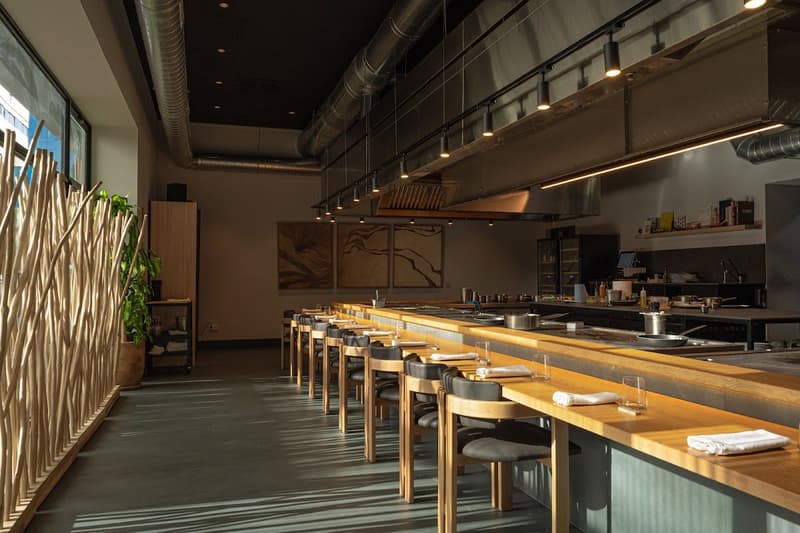
The atmosphere is focused and intimate, with the entire dining room arranged around the central teppanyaki bar where the action unfolds in real time. The industrial aesthetic reads a bit minimalist—some might say spare—but the energy comes from the live cooking theater and the palpable enthusiasm of the young brigade. Expect a tranquil, contemplative pace rather than high-octane energy, though the room fills with warmth as the chefs engage diners throughout service.
Service
The front-of-house team—led by professionals like Víctor, Ángel, and Cata—brings genuine hospitality and solid product knowledge, guiding diners through the sake selection and wine pairings with care. The service style is approachable and didactic, with staff eager to explain techniques and sourcing without being overbearing. There's a youthful earnestness here that compensates for any occasional lapses in polish—these are hospitality professionals still honing their craft but already delivering attentive, warm service.
Setting
The Japanese-influenced design centers entirely on the concave teppanyaki counter, creating an immersive, communal experience where every seat offers a front-row view of the cooking. The industrial backdrop—exposed surfaces, clean lines, minimal decoration—puts the focus squarely on the plancha and the chefs' hands at work. Located in the Salamanca district near Marqués de Villamagna, the space feels deliberately understated, letting the craft and precision of the cooking provide the visual drama.
These four dimensions are a handful of the attributes we review. The Insider Rating also draws on research the compass does not display — among them the wine programme, the size and quality of the cellar, the location, and how long the house has operated. It is not an average of the scores above.
Go for
- Watching two extraordinarily talented young chefs work a teppanyaki with Michelin-level technique and creativity
- A short, market-driven menu that fuses Spanish ingredients with Japanese precision in unexpected, intelligent ways
- An intimate counter experience where the cooking unfolds directly in front of you with real engagement from the brigade
Don't go for
- A traditional Japanese teppanyaki experience—this is decidedly fusion with strong Mediterranean influences
- A lavishly decorated dining room or conventional table service; the focus here is the counter and the plancha
Details
C. del Marqués de Villamagna, 1, Salamanca, 28001 Madrid, Spain
€€€