Quique Dacosta
Dénia, Spain
Insider Compass
An expert assessment built on data, context and gastronomic judgement.
RECOGNITIONS
About Quique Dacosta
Quique Dacosta holds court on Dénia's coast as one of Spain's most intellectually ambitious three-Michelin-starred temples, where the self-taught maestro transforms Mediterranean terroir into avant-garde edible poetry. This is cooking as contemporary art—each course a conceptual exploration of local ingredients pushed through radical techniques, theatrical presentations, and a philosophy that respects tradition while demolishing its boundaries. Expect a multi-sensory journey that demands your full attention and rewards those ready to engage with food as cultural narrative, not just sustenance.
Good to know
Book the lunch service over dinner—daylight transforms the coastal views and the energy feels slightly less ceremonial, plus you'll appreciate the intricate plating details better in natural light.
The chef
Quique Dacosta
Quique Dacosta is that rarest breed—a self-taught chef who climbed from washing dishes at age 14 to earning three Michelin stars and landing at #14 on the World's 50 Best list through pure obsession and singular vision. Without formal culinary school or prestigious stages under European masters, he forged his own path rooted in deep study of the Dénia ecosystem, building what he calls a "culinary philosophy" that treats Mediterranean ingredients as vehicles for contemporary artistic expression. His approach blends scientific technique with cultural anthropology—he's as likely to reference fine art as French technique—and that intellectual rigor earned him a Doctor Honoris Causa from the University of Elche and Spain's Gold Medal for Merit in the Fine Arts. After decades at the helm, he's now entrusting day-to-day kitchen operations to his longtime team while maintaining creative direction, a rare move that signals confidence in the system he's built.
The Insider Compass
Four dimensions, each assessed independently against the same criteria everywhere we rate.
Plate
Dacosta's cuisine mines the Costa Blanca ecosystem with near-scientific intensity—iconic Dénia red prawns, local olive varietals, and Mediterranean botanicals deconstructed and reimagined through fermentation, spherification, and techniques borrowed from molecular gastronomy's heyday but refined with maturity. The tasting menu unfolds like a gallery exhibition where dishes arrive as visual stunners first, flavor revelations second, balancing intense umami and brine-forward profiles with moments of surprising delicacy. This isn't comfort food—it's intellectually challenging, occasionally polarizing work that showcases flawless technical execution even when flavors lean bold and uncompromising.
Vibe
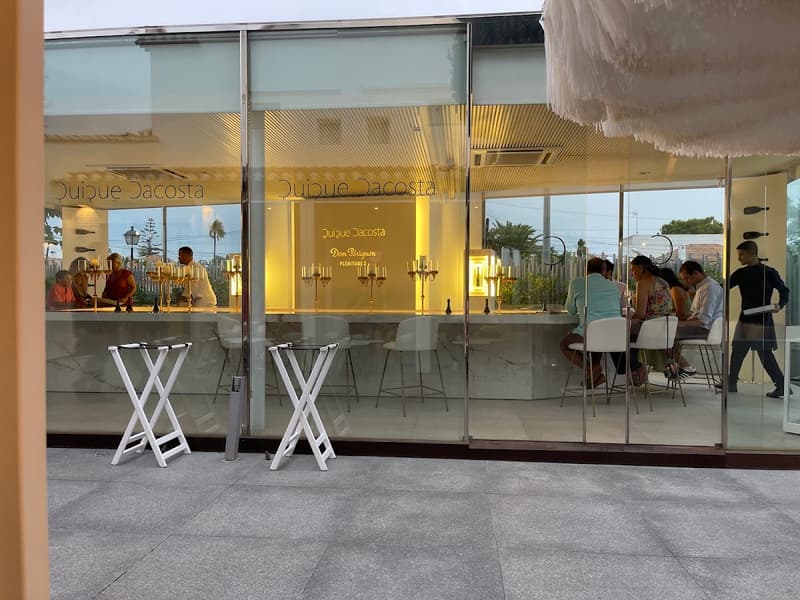
IntimateThe dining room carries the hushed reverence of a fine art museum, all clean lines and natural light flooding through windows that frame Mediterranean views, creating an atmosphere that's contemplative rather than celebratory. This is destination dining at its most formal—velvet-rope service and a pace that stretches across three hours demands you surrender to the experience completely. The crowd skews international and serious, collectors of Michelin stars who understand they're here for culinary philosophy as much as dinner.
Service
The brigade operates with military precision, delivering impeccable choreography where plates land in perfect synchrony and staff appear exactly when needed with detailed explanations of provenance and technique. Expect attentive, knowledgeable service that balances formality with genuine warmth—Dacosta himself often circulates during service, engaging diners with surprising humility given his stature. The team reads tables well, adjusting energy to match guests, though the overall tone remains decidedly high-ceremony rather than relaxed.
Setting
The restaurant occupies a modern building steps from the Mediterranean, with minimalist interiors that put focus squarely on the plates and the coastal landscape beyond floor-to-ceiling windows. Aperitivos are served outdoors on the terrace when weather permits, allowing the sea air and setting sun to frame the opening act before moving inside to the hushed dining room. The design language is clean, contemporary, and deliberately understated—white tablecloths, natural materials, and an aesthetic that lets the food command all attention.
These four dimensions are a handful of the attributes we review. The Insider Rating also draws on research the compass does not display — among them the wine programme, the size and quality of the cellar, the location, and how long the house has operated. It is not an average of the scores above.
Go for
- Experiencing one of Spain's most conceptually ambitious chefs at the height of his powers
- Avant-garde Mediterranean cooking that treats local ingredients as raw material for edible art
- A full three-Michelin-star experience in a stunning coastal setting at prices more approachable than equivalent temples elsewhere
Don't go for
- Recognizable comfort or tradition-bound Spanish cuisine—this is radical reinterpretation
- Casual celebration dining or relaxed pacing—the experience demands engagement and reverence
Details
Carrer Rascassa, 1, 03700 Dénia, Alicante, Spain
€€€€