Insider Compass
An expert assessment built on data, context and gastronomic judgement.
About Nomos Ante
Nomos Ante represents Rome's newest gastronomic ambition, opened in 2025 within the converted 18th-century Franciscan monastery that houses the Nomos Hotel in the historic Regola district. Chef Giulio Zoli, who trained under two-Michelin-starred Anthony Genovese at Il Pagliaccio and alongside international luminaries including Yannick Alleno and Seiji, brings a contemporary vision that marries Italian heritage with global techniques.
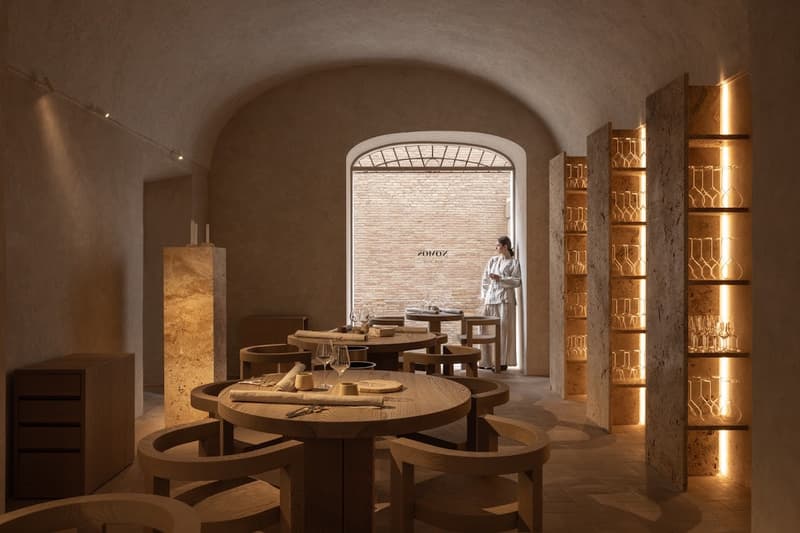
The restaurant's philosophy centers on tasting menus conceived as a progression from origin to full realization, with sauces serving as the connective tissue between cultures and territories. The minimalist interior by artist HENRYTIMI creates a striking contrast within the monastery's ancient walls, offering a design-forward dining experience that feels both reverent and modern. The wine program dedicates 60% to Italian excellence, focusing on native grapes and emerging regions, while championing small artisanal producers.
As a restaurant barely past its opening months, Nomos Ante shows promise but reveals the expected growing pains of a nascent venture. Reviews are heavily polarized, with enthusiastic Italian diners praising the creative balance and meticulous detail, while some international visitors have encountered significant service issues and menu inconsistencies.
Good to know
This is brand new territory—opened in 2025, so expect evolution. The chef is Michelin-hunting, which means the menu and execution will likely refine rapidly over the coming months.
The chef
Giulio Zoli
Giulio Zoli trained under Anthony Genovese at Rome's two-Michelin-starred Il Pagliaccio before working with international culinary figures including Yannick Alleno, Alex Atala, Alexandre Gauthier at La Grenouilliere, and Japanese chefs Shinichi Sato and Seiji. His cuisine blends Italian roots with global techniques, emphasizing sauces as cultural connectors.
The Insider Compass
Four dimensions, each assessed independently against the same criteria everywhere we rate.
Plate
Chef Zoli's cuisine demonstrates technical proficiency honed under Anthony Genovese at Rome's two-starred Il Pagliaccio, combined with international influences from stints with Yannick Alleno, Alex Atala, and Japanese masters Seiji and Shinichi Sato. His approach emphasizes sauces as cultural connectors, creating dishes that bridge Italian roots with global perspectives. The tasting menu format follows a narrative arc from origin to realization, suggesting conceptual ambition beyond simple ingredient showcasing.
Italian reviewers consistently praise the balance between technique and instinct, describing dishes as "creative but equilibrated" and "curated in the smallest details." The cooking appears refined and contemporary, with one diner comparing it favorably to multiple two-Michelin-starred experiences. However, significant inconsistency emerges in critical reviews—one lunch service produced complaints about basic Italian staples like carbonara and pizza not meeting expectations, suggesting either menu confusion or execution gaps.
At this early stage, the kitchen shows strong potential but lacks the consistency required for Michelin recognition. The ambitious fusion approach requires flawless execution to succeed, and with only months of operation, the team is still finding its rhythm. The food appears strongest when Zoli executes his personal vision on the tasting menu rather than attempting casual Italian classics.
Vibe
IntimateThe atmosphere draws its power from the 18th-century Franciscan monastery setting, where ancient stone walls and religious architecture create an inherently dramatic backdrop. HENRYTIMI's minimalist artistic intervention strips away unnecessary ornamentation, allowing the historic bones to speak while introducing contemporary sensibility. Reviews describe the environment as "elegant but warm and welcoming" and note feeling transported through time.
The energy reads as refined and intimate, befitting a small hotel restaurant with Michelin aspirations. Guests reference the "unique design" and "particular refinement" with attention to detail throughout. However, the newness means the atmosphere hasn't yet developed the lived-in confidence of established fine dining spaces—it still feels more hotel restaurant than destination in its own right.
Service
Service quality appears highly variable and remains the restaurant's most concerning weakness. Italian reviewers consistently praise "attentive service" and "impeccable service," describing staff as careful and professional. The wine service specifically demonstrates knowledge, with sommeliers guiding guests through the curated selection of artisanal producers.
However, severe service failures appear in critical reviews, with one international visitor describing service as "non-existent" during lunch service and expressing frustration about wine availability and menu execution. This dramatic disparity suggests either inconsistent staffing between services or possible preferential treatment based on guest profile. For a restaurant with Michelin ambitions, such service gaps are fatal—consistency across all services and guest types is non-negotiable at the starred level. The team requires significant development to match the chef's technical ambitions.
Setting
The converted 18th-century Franciscan monastery in Rome's Regola district provides an extraordinarily rare canvas for a restaurant. The building's religious heritage—stone walls, vaulted ceilings, and monastic architecture—creates instant gravitas and historical resonance that cannot be manufactured. The UNESCO World Heritage location within Rome's historic center adds further prestige.
HENRYTIMI's minimalist design wisely restrains contemporary intervention, allowing the architecture to dominate while introducing subtle modern elements. This approach creates the "leap through time" effect multiple reviewers mention. The monastery setting positions Nomos Ante among Rome's most architecturally significant dining spaces, though the actual dining room configuration and table spacing details remain unclear from available information. The setting alone justifies a visit—it's the restaurant's unquestionable triumph.
These four dimensions are a handful of the attributes we review. The Insider Rating also draws on research the compass does not display — among them the wine programme, the size and quality of the cellar, the location, and how long the house has operated. It is not an average of the scores above.
Go for
- The extraordinary 18th-century Franciscan monastery setting with minimalist design intervention
- Chef Giulio Zoli's contemporary Italian cuisine informed by training at Il Pagliaccio and international Michelin kitchens
- The curated wine program focusing on native Italian grapes and artisanal producers
Don't go for
- A guaranteed Michelin-level experience—the restaurant is brand new (2025) with significant service and consistency issues
- Traditional Roman cuisine or casual Italian classics, which appear to be menu misfires based on critical feedback
Details
Hotel Nomos, Via di S. Paolo alla Regola, 3, 00186 Roma RM, Italy
€€