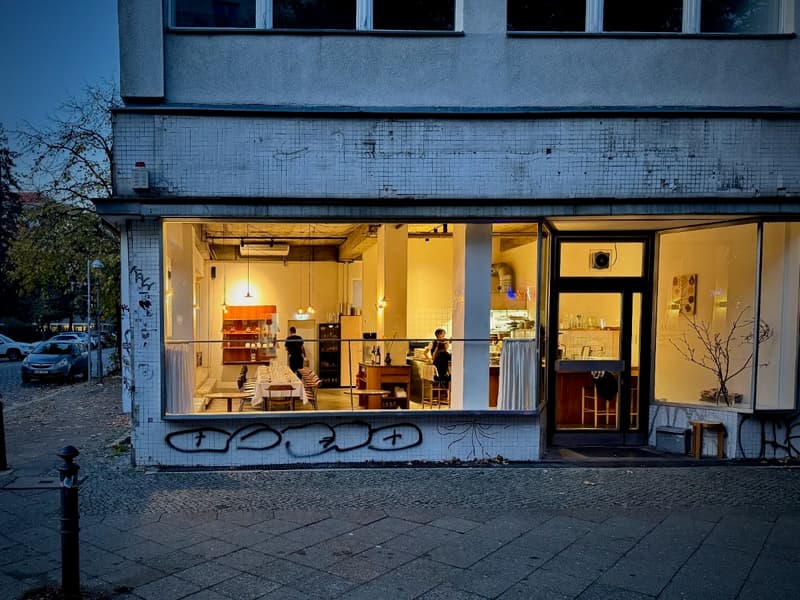
Julius Ernst
Berlin, Germany · Mitte
Insider Compass
An expert assessment built on data, context and gastronomic judgement.
RECOGNITIONS
About Julius Ernst
Julius Ernst is the more accessible sibling of Michelin-starred Ernst, where chef Dylan Watson-Brawn brings his Noma, RyuGin, and Eleven Madison Park pedigree to a relaxed counter-dining format in Wedding. The menu draws from the same biodynamic and chemical-free produce as its elder sibling, expressed through French technique and Japanese restraint in an omakase-style progression. With in-house roasted coffee by day and multicourse dinners by night, plus the attached Cave Ernst wine bar, it's a rare all-day destination for serious eating without the formality.
Good to know
Book the counter seats for the full experience—watching Watson-Brawn's team work the line is half the pleasure, and you'll catch explanations and techniques that table diners miss.
The chef
Dylan Watson-Brawn
Dylan Watson-Brawn earned his stripes across three of the world's most demanding kitchens—RyuGin in Tokyo, Noma in Copenhagen, and Eleven Madison Park in New York—before landing in Berlin to helm Julius Ernst. His cooking philosophy centers on biodynamic sourcing and chemical-free produce, filtered through the Japanese restraint he absorbed at RyuGin and the Nordic seasonality from his Noma years. The approach earned him Gault-Millau Chef of the Year for Germany in 2022, recognition that validated his ability to translate elite international training into a distinctly Berlin context. At Julius, he's built a more relaxed and accessible expression of the same produce and principles that drive the Michelin-starred Ernst next door.
The Insider Compass
Four dimensions, each assessed independently against the same criteria everywhere we rate.
Plate
Watson-Brawn's cooking demonstrates the precision and seasonality honed across three continents, with dishes that privilege ingredient purity over elaboration. The kitchen works with biodynamic produce to build flavor through technique—expect gentle umami layers, restrained acidity, and the kind of textural contrasts that reveal serious training. Brunch has earned a devoted following for its caramelized French toast and impossibly silky tear-shaped omelet, both studies in timing and temperature control.
Vibe
IntimateThe minimalist interior follows a wabi-sabi aesthetic—clean lines, natural materials, and an open kitchen where you can watch the brigade's calm choreography. The space feels relaxed yet intentional, drawing a crowd that skews culinary-minded without the stuffiness of formal fine dining. Acoustics can be tricky when full, but the overall energy remains professional and unhurried.
Service
The team balances casual hospitality with fine-dining attentiveness, refilling glasses without hovering and guiding you through the menu with genuine knowledge. Sommeliers take time to pour tastings and match the largely biodynamic wine list to your preferences, while servers explain dishes with the kind of detail that signals kitchen experience. Pacing is generally well-judged across the three-hour progression, though service consistency has occasionally wavered during busy periods.
Setting
The counter-seating layout puts you face-to-face with the kitchen, offering a direct view into mise en place and plating precision. The design is stripped-back and Japanese-inflected, with white walls, minimal signage, and an aesthetic that lets the food take center stage. Located on Gerichtstraße in Wedding, it occupies a quietly cool pocket of Berlin that feels refreshingly removed from the city's more tourist-heavy dining districts.
These four dimensions are a handful of the attributes we review. The Insider Rating also draws on research the compass does not display — among them the wine programme, the size and quality of the cellar, the location, and how long the house has operated. It is not an average of the scores above.
Go for
- Dylan Watson-Brawn's refined technique honed at Noma, RyuGin, and Eleven Madison Park, applied to biodynamic German produce
- The accessible omakase format and counter-dining intimacy without the formality or price tag of Ernst proper
- Outstanding brunch—particularly the caramelized French toast and perfectly set omelet—plus in-house roasted coffee
Don't go for
- A quiet, intimate conversation—the acoustics can make dialogue challenging when the space fills up
- A bargain meal—the pricing reflects the quality and sourcing, and portions follow the Japanese model of balance over abundance