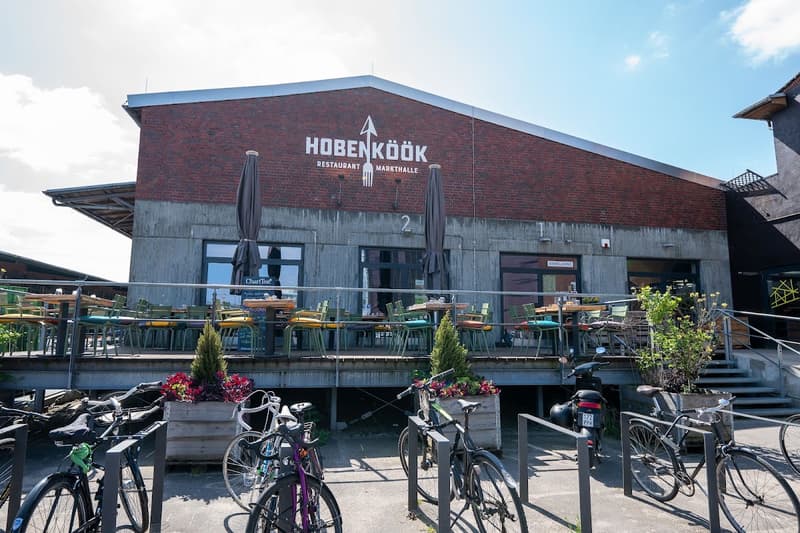
Hobenköök Restaurant & Markthalle
Hamburg, Germany · Hamburg-Mitte
Insider Compass
An expert assessment built on data, context and gastronomic judgement.
About Hobenköök Restaurant & Markthalle
Hobenköök is where chef Thomas Sampl's vision of radical regionalism meets daily market reality—a working Markthalle stocked with produce from over 200 Northern German suppliers that doubles as the restaurant's larder. The menu changes daily based on what arrives, with the kitchen committed to nose-to-tail and root-to-leaf cooking that wastes nothing and honors the full potential of each ingredient. It's honest, modern Hamburg cuisine rooted in terroir, served in a converted industrial space where diners can shop the same exceptional products they've just eaten, making it essential for anyone serious about understanding contemporary Northern German food culture.
Good to know
Arrive early to browse the market before your reservation—it contextualizes the meal and you can purchase the same ingredients the kitchen uses, especially the exceptional fish and house-cured charcuterie.
The chef
Thomas Sampl
Thomas Sampl built his foundations at the Parkhotel Gütersloh before working under Günther Scherrer and Bobby Bräuer at Victorian in Düsseldorf, where he absorbed classical technique from two of Germany's most rigorous kitchens. He went on to hold Head Chef positions at The Westin Bellevue Dresden and later Park Hyatt Hamburg, refining his skills in luxury hotel gastronomy before pivoting toward the regional, sustainability-focused cooking that defines his work today. At Hobenköök, Sampl has become a pioneer of regional cuisine in Northern Germany, championing hyper-local sourcing, daily market-driven menus, and a zero-waste philosophy that treats every part of each ingredient as precious—a marked departure from the luxury hotel world but rooted in the same technical discipline.
The Insider Compass
Four dimensions, each assessed independently against the same criteria everywhere we rate.
Plate
Sampl's cooking is technically precise but unpretentious, letting the inherent quality of regional ingredients speak through dishes like crispy-skinned cod with seasonal vegetables or pork belly with sweet potato—preparations that showcase proper Maillard development and thoughtful acid balance. The daily-changing menu means you're eating what's genuinely in season, not what's been flown in, with a focus on Nordic technique applied to Hanseatic tradition. Vegetable cookery is particularly strong here, with the kitchen treating local produce with the same reverence most reserve for protein.
Vibe
LivelyThe market hall setting creates a lively, convivial energy—this is a working space with shoppers browsing artisan goods while diners eat, so expect ambient buzz and industrial acoustics rather than hushed intimacy. The atmosphere skews casual-sophisticated, drawing a mix of neighborhood regulars, culinary-minded locals, and visitors who've heard about the sustainability ethos. The sunny terrace offers a quieter alternative during warm months, though the indoor energy is part of the charm.
Service
The team brings genuine enthusiasm for the provenance of what they're serving, though pacing can feel uneven during peak times when the kitchen is managing both restaurant and market operations. Staff are knowledgeable about sourcing and happy to discuss which farm delivered the morning's vegetables, though you may experience longer waits between courses on busy evenings. The approach is relaxed and unpretentious—this isn't formal service, but rather informed hospitality from people who believe deeply in the product.
Setting
The converted warehouse retains its industrial bones—exposed beams, concrete floors, utilitarian lighting—softened by the abundance of market displays that create visual warmth and color. The open layout blurs boundaries between retail and restaurant, with the market's seasonal produce becoming part of the dining room's aesthetic. It's a deliberately unfussy space in a quiet, off-the-beaten-path location in Hamburg's Speicherstadt periphery, where the focus stays squarely on the food rather than design flourishes.
These four dimensions are a handful of the attributes we review. The Insider Rating also draws on research the compass does not display — among them the wine programme, the size and quality of the cellar, the location, and how long the house has operated. It is not an average of the scores above.
Go for
- Experiencing modern Northern German cuisine rooted in genuine seasonality and radical local sourcing
- The unique market-restaurant hybrid that lets you shop the terroir you're tasting
- Chef Thomas Sampl's nose-to-tail, waste-conscious cooking philosophy executed with technique and respect
Don't go for
- A quiet, intimate dinner—the market hall acoustics and working-space energy mean it gets lively and loud
- A predictable menu you can plan around—the daily-changing offerings mean you won't know exactly what's available until you arrive
Details
Stockmeyerstraße 43, 20457 Hamburg, Germany
$$