Fish Market Tsukiji Outer Market
Chuo City, Japan · 16
Insider Compass
An expert assessment built on data, context and gastronomic judgement.
About Fish Market Tsukiji Outer Market
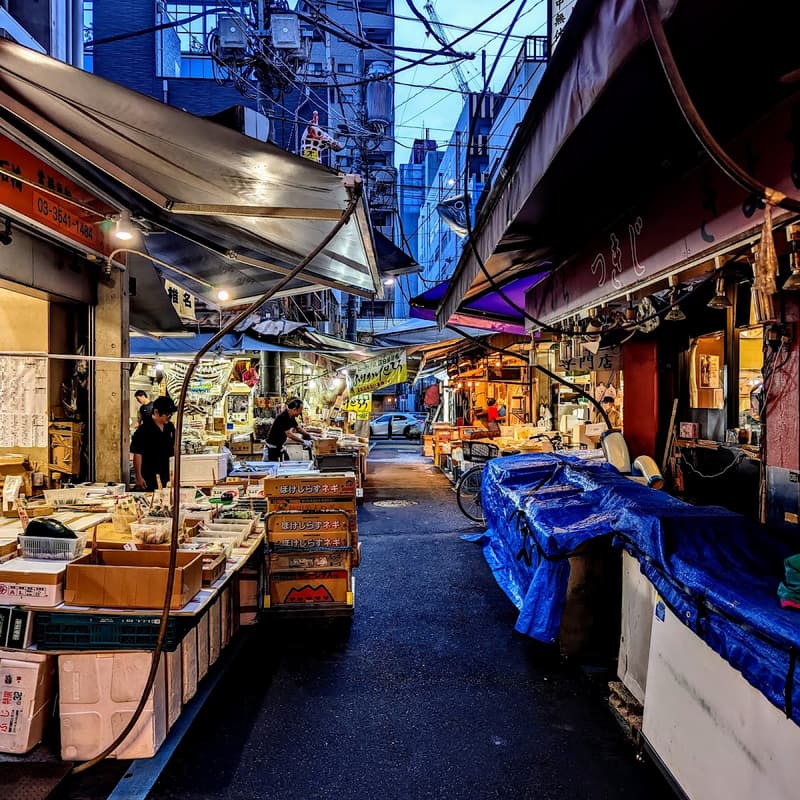
The Tsukiji Outer Market is Tokyo's most electrifying food destination, a labyrinth of narrow streets packed with over 400 shops and restaurants where chefs, restaurateurs, and food lovers converge over the city's freshest catch. Operating since 1935, this historic district survived the wholesale market's 2018 relocation to Toyosu, maintaining its position as the beating heart of Tokyo's seafood culture with early-morning sushi breakfasts, grilled scallops hissing on charcoal, and kaisendon piled high with glistening slices of tuna and uni. The energy here is pure shokudo theater—vendors shucking oysters, flames licking A5 wagyu skewers, and the intoxicating perfume of grilled shellfish mixing with sweet tamago wafting from century-old stalls. It's for anyone who wants to eat like a local in Tokyo, though the tourist crowds and premium pricing mean you'll need to navigate strategically.
Good to know
Arrive between 8-9am for the best balance of selection and crowd management—early enough to snag prime product before sellouts, late enough to avoid the pre-dawn sushi pilgrimage masses.
The Insider Compass
Four dimensions, each assessed independently against the same criteria everywhere we rate.
Plate
The seafood quality is extraordinary—toro that dissolves on contact, uni with clean ocean sweetness, and hotate (scallops) grilled to caramelized perfection demonstrate why Tokyo's chefs have sourced here for decades. Street food offerings range from traditional tamagoyaki with proper dashi-sweetened custard texture to kaisendon bowls where the rice temperature and fish caliber vary wildly depending on which stall you choose. The wagyu skewers deliver proper marbling and char, though pricing can reach aggressive levels at tourist-heavy stands.
Vibe
LivelyThe atmosphere is wonderfully chaotic—narrow lanes thick with foot traffic, steam rising from grills, and the constant call-and-response of vendors working their stations with practiced efficiency. Mornings bring the most authentic energy when professional buyers still make their rounds, though the market maintains its kinetic buzz well into lunch service. Tourist density has shifted the feel from purely professional to more theme-park-adjacent in peak hours, but the underlying rhythm of a working food district persists.
Service
Service is functional and fast-paced—vendors are focused on volume and turnover rather than hand-holding, expecting customers to know what they want or point decisively. English proficiency varies significantly from stall to stall, with some offering multilingual menus while others operate on gestures and nods. The hospitality style reflects traditional market culture: efficient, fair, and occasionally brusque when crowds surge, though genuine warmth emerges when you show respect for the food and the craft.
Setting
The outdoor market setting features covered walkways and open storefronts creating an immersive sensory experience where sightlines are cluttered with hanging signs, ice-packed seafood displays, and smoking grills. Located in Chuo City's Tsukiji district, the warren of streets maintains its weathered, working-market aesthetic despite modernization pressures—concrete underfoot, corrugated metal overhead, and decades of patina on wooden stalls. The visual appeal lies in authentic disorder rather than design: stacks of styrofoam boxes, dangling price tags in kanji, and the brilliant colors of seasonal fish on crushed ice.
These four dimensions are a handful of the attributes we review. The Insider Rating also draws on research the compass does not display — among them the wine programme, the size and quality of the cellar, the location, and how long the house has operated. It is not an average of the scores above.
Go for
- Experiencing Tokyo's most authentic seafood culture in a working market environment
- Early-morning sushi breakfast with toro, uni, and seasonal catches at peak freshness
- Street food theater—watching skilled vendors grill scallops, shuck oysters, and slice sashimi to order
Don't go for
- Budget dining—tourist pricing means you'll pay significantly more than neighborhood sushi-ya for comparable quality
- Intimate, quiet meals—the market is relentlessly crowded, noisy, and often requires eating standing up
Details
Japan, 〒104-0045 Tokyo, Chuo City, Tsukiji, 4-chōme−16 および6丁目一部
$$