De Kas
Amsterdam, Netherlands · Amsterdam-Oost
Insider Compass
An expert assessment built on data, context and gastronomic judgement.
RECOGNITIONS
About De Kas
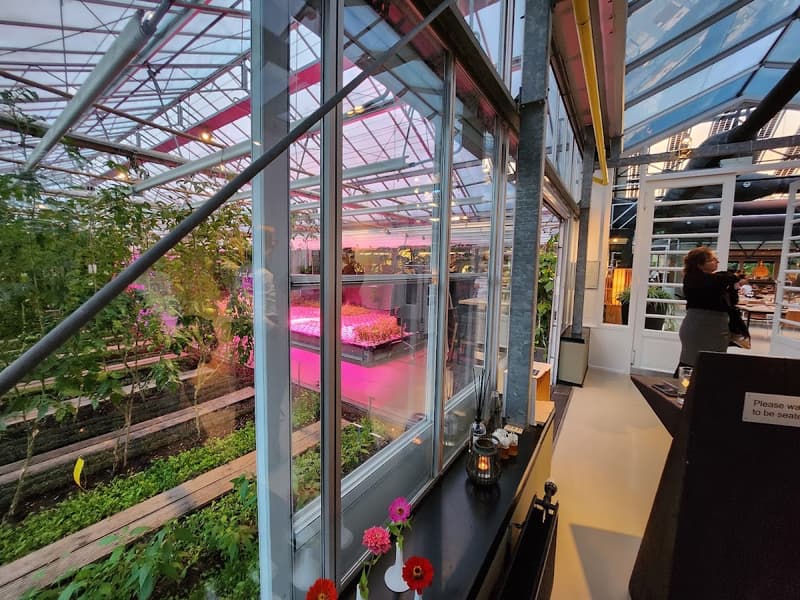
De Kas has shaped Amsterdam's farm-to-table movement from its home in a luminous 1920s municipal greenhouse, where 300 varieties of vegetables, herbs, and fruits grow on-site and at the restaurant's field in Beemster. The kitchen, led by Savannah Hagendijk, crafts a daily-changing fixed menu that honors the morning's harvest with Dutch precision and Mediterranean warmth, earning both a Michelin star and the coveted Green Michelin star for its uncompromising commitment to sustainability. This is thoughtful, vegetable-forward gastronomy that treats produce with the reverence most kitchens reserve for protein, served in a setting where the line between garden and dining room beautifully blurs.
Good to know
Walk through the greenhouse and gardens before your reservation—seeing the morning's harvest still growing on-site fundamentally shifts how you'll experience each dish.
The chef
Savannah Hagendijk
Savannah Hagendijk came to De Kas with a foundation built at Rijks restaurant in the Rijksmuseum, where she developed her understanding of Dutch culinary heritage and precision technique. Her approach centers on radical seasonality and minimal intervention, allowing the farm's daily yield to dictate the menu rather than forcing ingredients into predetermined concepts. Hagendijk's philosophy treats sustainable sourcing not as marketing but as fundamental practice, working intimately with the on-site greenhouse and Beemster field to understand each variety's optimal harvest moment and ideal preparation. Under her direction, the kitchen maintains the restaurant's Michelin star and Green Michelin star while continuing to evolve the vegetable-focused vocabulary that De Kas pioneered.
The Insider Compass
Four dimensions, each assessed independently against the same criteria everywhere we rate.
Plate
The cooking here celebrates seasonality without compromise—what arrives on your plate was likely harvested that morning, and the kitchen's restraint allows each ingredient's intrinsic character to speak clearly. Techniques lean toward delicate Mediterranean preparations that coax out natural sweetness and umami, with dishes built around vegetable heroes rather than treating them as accompaniment. The five and six-course progressions showcase remarkable depth from the garden, though some guests find the cuisine's purity and simplicity a touch austere when craving more complexity or richness.
Vibe
LivelyThe greenhouse architecture floods the space with natural light, creating an atmosphere that feels both refined and organically serene, more botanical garden than traditional fine dining temple. The semi-open kitchen adds gentle energy without overwhelming conversation, while the crowd skews toward gastronomy devotees who appreciate the restaurant's pioneering ethos. The garden terrace transforms summer service into something gloriously pastoral, though the airy space can feel pleasantly animated when full.
Service
The brigade approaches hospitality with warm professionalism, delivering detailed explanations of each dish's provenance and preparation without pretension or script. Staff demonstrate genuine knowledge of the farm's cultivation practices and can guide you thoughtfully through the 40-label sustainable wine list, which changes by the glass daily to match the menu's evolution. Pacing generally allows proper appreciation of each course, though the kitchen occasionally loses rhythm during peak service.
Setting
The restored 1920s greenhouse provides a singular backdrop—soaring glass walls, original ironwork, and abundant greenery create an environment where architecture and horticulture perform equal roles. Located in Park Frankendael, the approach via wooden bridge sets a tone of peaceful escape despite remaining within Amsterdam's urban fabric. The interior maintains the structure's industrial bones while incorporating contemporary comfort, and watching chefs work in the visible kitchen adds theater to the botanical beauty surrounding you.
These four dimensions are a handful of the attributes we review. The Insider Rating also draws on research the compass does not display — among them the wine programme, the size and quality of the cellar, the location, and how long the house has operated. It is not an average of the scores above.
Go for
- The purest expression of farm-to-table philosophy in Amsterdam, where morning harvest dictates evening service
- Vegetable-forward gastronomy that treats produce as the star rather than supporting act
- A greenhouse setting that genuinely integrates growing spaces with refined dining in ways few restaurants achieve
Don't go for
- Protein-centric dining expectations or if you need substantial meat or fish to feel satisfied
- Menu control—the daily-changing fixed format means no substitutions or à la carte flexibility
Details
Kamerlingh Onneslaan 3, 1097 DE Amsterdam, Netherlands
$$$