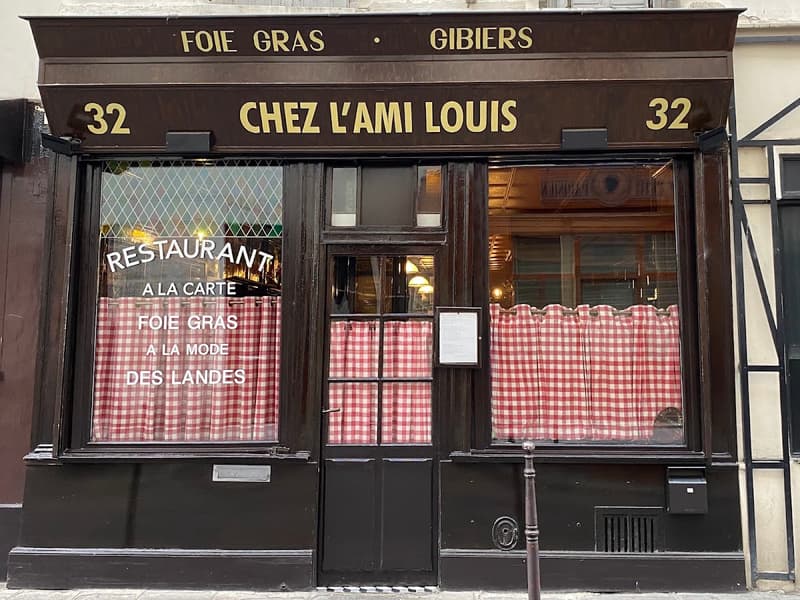
Chez l'Ami Louis
Paris, France · Arts-et-Métiers
Insider Compass
An expert assessment built on data, context and gastronomic judgement.
RECOGNITIONS
About Chez l'Ami Louis
Chez l'Ami Louis has occupied a singular position in Parisian dining since 1924—a legendary bistro that polarizes critics and diners alike. Recently acquired by LVMH, this intimate fourteen-table establishment in the 3rd arrondissement serves traditional French bistro fare in a setting unchanged by time: dark walls, mirrors, pink tablecloths, and white-coated waiters evoke a Paris of another era. The restaurant's reputation rests primarily on its signature roast chicken, thickly sliced foie gras, and roast lamb—simple preparations executed with premium ingredients.
The restaurant's mystique attracts an international clientele, with many Americans making pilgrimages for the classic experience. However, Chez l'Ami Louis remains one of Paris's most controversial dining destinations. While devotees celebrate the atmospheric charm and exceptional ingredient quality, detractors dismiss it as overpriced and catering to tourists who don't know better. The 3.7 Google rating reflects this divide: passionate five-star reviews praising the authenticity sit alongside one-star complaints about unprofessional service, difficulty making reservations, and extreme prices relative to value. The recent LVMH acquisition has only intensified scrutiny, with critics questioning whether the institution can maintain whatever magic it once possessed.
Good to know
Reservations are notoriously difficult—the restaurant only accepts phone bookings (no email or online), and multiple reviewers report needing to confirm by calling back or being turned away despite reservations.
The chef
Antoine Magnin
Antoine Magnin leads the kitchen at Chez l'Ami Louis, maintaining the restaurant's traditional bistro preparations. Specific details about his background and training are not publicly available.
The Insider Compass
Four dimensions, each assessed independently against the same criteria everywhere we rate.
Plate
The cuisine at Chez l'Ami Louis centers on classic French bistro preparations executed with premium ingredients. The signature roast chicken has achieved legendary status among devotees, while the foie gras served in thick slices and roast lamb represent the restaurant's commitment to simple, traditional recipes without modern reinterpretation. Reviews consistently acknowledge the top-notch quality of ingredients, with supporters emphasizing that the restaurant delivers authentic bistro fare made exceptional through sourcing rather than technique.
However, the food receives mixed assessments that reflect broader debates about the restaurant's value proposition. While some diners find the preparations perfectly executed examples of traditional French cooking, others question whether the food justifies the extreme pricing. The cooking style is deliberately old-fashioned—no trendy reinterpretations or contemporary plating—which some appreciate as authenticity and others view as dated. The generous portions can lead to significant waste, which multiple reviewers note as problematic. The plate score reflects solid bistro cooking with excellent ingredients, but not the innovation or refinement expected at premium contemporary establishments.
Vibe
IntimateThe atmosphere represents a time capsule of classic Parisian bistro culture. With only fourteen tables in a dining room featuring dark walls, mirrors, and pink tablecloths, the setting creates an intimate environment that supporters describe as atmospheric and one of Paris's most charming spaces. The white-coated waiters complete the traditional tableau, evoking a Paris that existed long before the era of industrial chic and minimalist design.
The clientele contributes significantly to the experience, with many Americans among the guests seeking an authentic French dining experience. This international draw creates a somewhat paradoxical atmosphere—a restaurant celebrated for authenticity that attracts visitors precisely because of its legendary reputation. The small size ensures a quiet, intimate setting that falls firmly into WHISPER territory, though the experience can feel performative given the restaurant's controversial reputation and tourist appeal.
Service
Service represents perhaps the most contentious aspect of the Chez l'Ami Louis experience. The restaurant employs traditional white-coated waiters who deliver what some reviewers celebrate as quality service befitting the classic setting. Supporters specifically mention the professionalism and traditional hospitality as part of the overall charm.
However, multiple reviewers report extremely unprofessional and discourteous treatment, particularly during the reservation process and upon arrival. Complaints include staff appearing to do the bare minimum, guests being turned away despite confirmed reservations, and a general attitude that suggests the restaurant doesn't particularly need or want your business. The phone-only reservation system frustrates international visitors, with some reporting months of attempts to secure a booking. The service score reflects this dramatic inconsistency—when the experience works, it delivers traditional French hospitality; when it doesn't, guests feel dismissed and disrespected. The floor score applies here given the significant service complaints documented in reviews.
Setting
The historic building dating to 1924 has maintained its original character through decades of service. Located in the 3rd arrondissement on Rue du Vertbois, the restaurant occupies a UNESCO-protected area of Paris, adding historical gravitas to the dining experience. The interior's dark walls, mirrors, and pink tablecloths create a distinctly old-Paris atmosphere that either charms or feels dated depending on your perspective.
The fourteen-table capacity ensures an intimate scale, though reviews don't specifically mention generous spacing between tables. The lack of terrace or exceptional views means the setting relies entirely on its interior period atmosphere and historical pedigree. The extensive wine selection with a strong Bordeaux presence enhances the traditional French dining experience, though specific bottle counts aren't documented. The recent LVMH acquisition adds contemporary luxury cachet to the century-old establishment, though it remains unclear how ownership will impact the restaurant's character going forward.
These four dimensions are a handful of the attributes we review. The Insider Rating also draws on research the compass does not display — among them the wine programme, the size and quality of the cellar, the location, and how long the house has operated. It is not an average of the scores above.
Go for
- Experiencing a legendary (if controversial) piece of Paris dining history in an unchanged setting
- Classic French bistro preparations—particularly the famous roast chicken—made with premium ingredients
- An intimate, atmospheric dining room that captures old-Paris charm with only fourteen tables
Don't go for
- Modern cuisine, innovation, or contemporary plating—this is deliberately traditional and unchanging
- Warm, welcoming service—multiple reviews document difficult reservations and inconsistent hospitality that can feel dismissive