Insider Compass
An expert assessment built on data, context and gastronomic judgement.
RECOGNITIONS
About Aragawa
Since 1967, Aragawa has held its ground as a temple to Tajima beef, the purebred ancestor of what the world knows as Kobe. Hidden behind an unassuming door in Minato City, this intimate steakhouse practices a kind of culinary minimalism that borders on reverence: dry-aged beef grilled over binchotan charcoal in a specially built kiln, seasoned only with salt and pepper. The wine cellar, stocked with 1,000 bottles of mature grand cru from Bordeaux, Bourgogne, and Champagne, is calibrated to the richness of the beef, making this a pilgrimage site for carnivores who understand that terroir applies to cattle as much as it does to vines.
Good to know
If the kitchen mentions they have Okazaki Farm beef in stock—especially the rare 56-month fillet—order it without hesitation; it's a once-a-year allocation and represents the pinnacle of what Tajima cattle can achieve.
The chef
Fumiya Kase
The kitchen at Aragawa is guided by Fumiya Kase, who trained under Kazuo Imayoshi, the legendary steak master who honed his craft at a local yoshoku (Western-style Japanese cuisine) restaurant in Tokyo before becoming assistant to the original owner-chef of Aragawa. Imayoshi's philosophy—that the best beef requires only fire, salt, and restraint—has been passed down through the brigade, and Kase continues to uphold that minimalist discipline. The focus is on sourcing exceptional Tajima cattle, often from single farms with multi-year aging programs, and allowing the binchotan kiln to do the work with near-surgical precision.
The Insider Compass
Four dimensions, each assessed independently against the same criteria everywhere we rate.
Plate
The kitchen's approach is surgical in its simplicity: 56-month Tajima beef or 36-month Kobe, grilled to order over white charcoal that imparts a whisper of smoke without overwhelming the profound marbling and umami depth. The 400-gram minimum per order might seem daunting, but the fat renders so cleanly and the meat cuts with such little resistance that diners often find themselves scraping the plate, flanked by restrained but expertly executed appetizers like house-smoked salmon and rich beef consommé.
Vibe
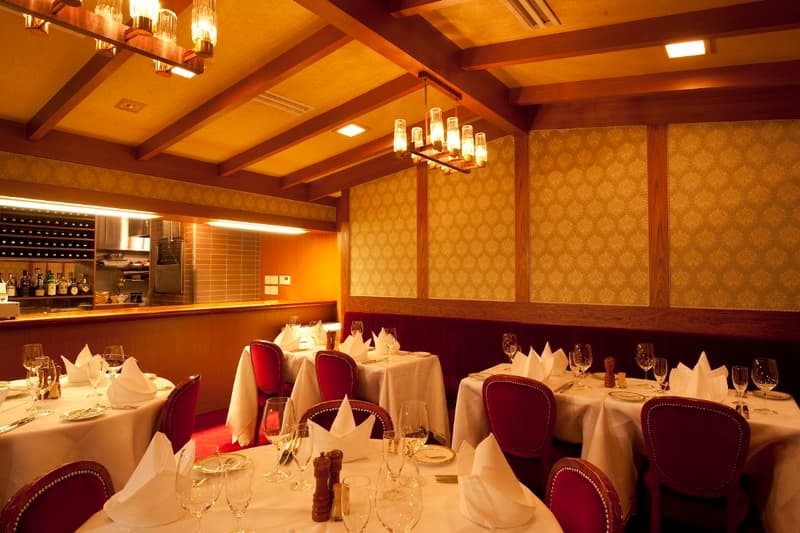
IntimateThe atmosphere is hushed and formal without being stuffy—a kind of old-world Japanese luxury that prioritizes intimacy over spectacle. Expect low lighting, plush seating, and a clientele that treats the evening as an occasion, not a casual dinner. The room feels like a private club where everyone speaks in measured tones and the only real drama unfolds on the grill.
Service
The brigade operates with the kind of precision and discretion you'd expect from a restaurant that's been perfecting the same ritual for over five decades. Servers guide you through the beef selections with genuine expertise, adjust cooking temperatures to your preference (or gently steer you toward their recommendation), and orchestrate wine pairings from the cellar with the care of sommeliers who know the collection intimately.
Setting
Tucked into the ground floor of an unassuming office building near Onarimon Station, Aragawa's exterior gives nothing away—only a discreet nameplate and a heavy door that feels like a threshold into another era. Inside, the wood-paneled dining room and traditional Western-style décor evoke a mid-century steak club, intimate and warmly lit, with just enough tables to keep the experience exclusive. The open grill is the visual anchor, where chefs tend to the meat with monastic focus.
These four dimensions are a handful of the attributes we review. The Insider Rating also draws on research the compass does not display — among them the wine programme, the size and quality of the cellar, the location, and how long the house has operated. It is not an average of the scores above.
Go for
- The purest expression of Tajima beef you'll find anywhere, dry-aged and grilled over binchotan with zero distractions
- A wine cellar that reads like a Bordeaux collector's dream, with mature grand cru chosen specifically to cut through marbled fat
- A dining experience that feels like being admitted into a private ritual that's been perfected over more than 50 years
Don't go for
- A casual meal or experimentation with diverse flavors—this is a single-minded devotion to beef and little else
- Budget dining; the price reflects the rarity of the cattle, the aging process, and the decades of craft behind every plate
Details
Japan, 〒105-0003 Tokyo, Minato City, Nishishinbashi, 3-chōme−23−11 御成門小田急ビル 1階
$$$$